Anyone paying down more than one debt at once, and the advisers and bookkeepers who are asked which one to clear first.
How it works
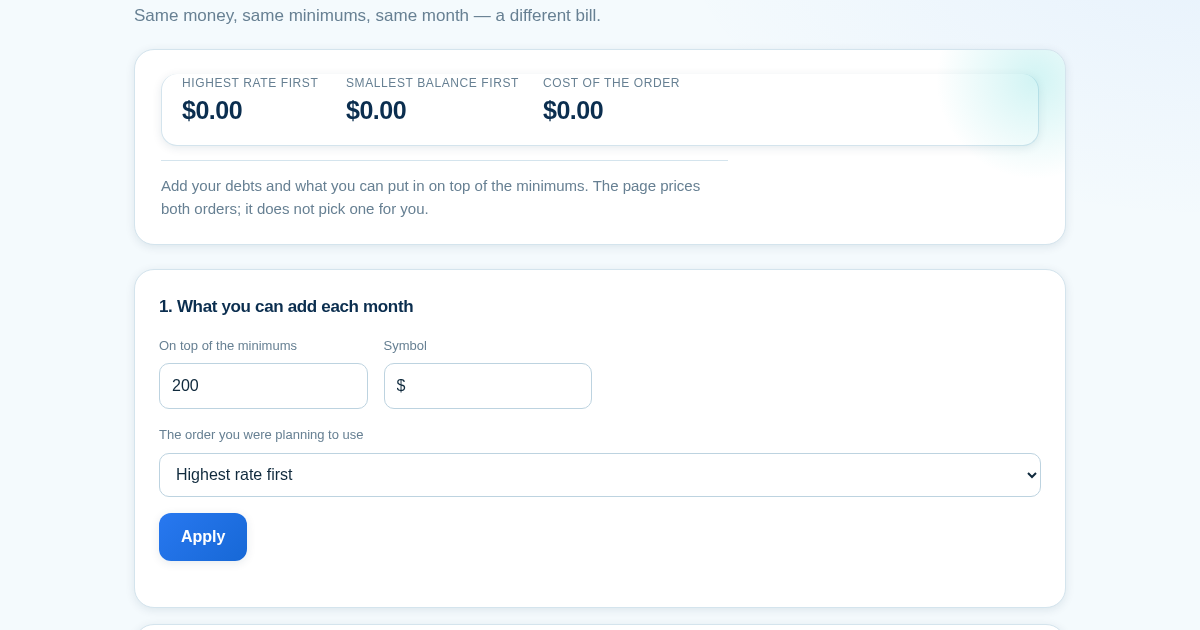
- Enter what you can add each month on top of the minimums.
- Add each debt with its balance, its rate and its minimum payment.
- Read the two orders side by side — months and interest for each.
- Check the flagged debts: those do not fall on the minimum at all.
What you gain
- Mostra exatamente quantos reais a mais você paga ao quitar primeiro a dívida menor em vez da que tem a taxa mais alta — mês a mês, sobre a mesma dívida real.
Screenshot
Technical details
How to set up & use
- Buy the license — your key (lic_...) appears on the order page and in your email.
- Sign in at app.synoriaai.com with your license key.
- No installation — the product runs in your browser, on your own isolated instance.
- 1. Open the calculator and enter the extra amount you can pay each month in the 'Extra payment' field, then click 'Save settings'.
- 2. For each debt, fill in its name, current balance, annual interest rate (as a percentage), and minimum monthly payment, then click 'Add debt'.
- 3. Repeat step 2 for all your debts (at least two are needed to compare orders).
- 4. Click 'Calculate' to see both payoff orders side by side, including total interest and months to payoff for each.
- 5. Review the results: the calculator shows which order costs less, flags any debts that never clear on minimum payments alone, and notes if both orders give the same result.
Frequently asked questions
Does this calculator store my debt data anywhere?
No. All calculations happen in your browser, and your entered debts are not sent to or saved on any server.
What happens if a debt's minimum payment is less than the monthly interest?
The calculator flags that debt as one that will never be paid off with minimum payments alone, because the balance won't decrease. You'll need to increase the minimum or allocate extra money to it for it to clear.
Does this tool recommend which debt to pay first?
No. It only prices both possible orders (smallest balance first and highest interest rate first) using your exact debts, minimums, and extra amount, so you can see the total cost difference and decide for yourself.
Related products
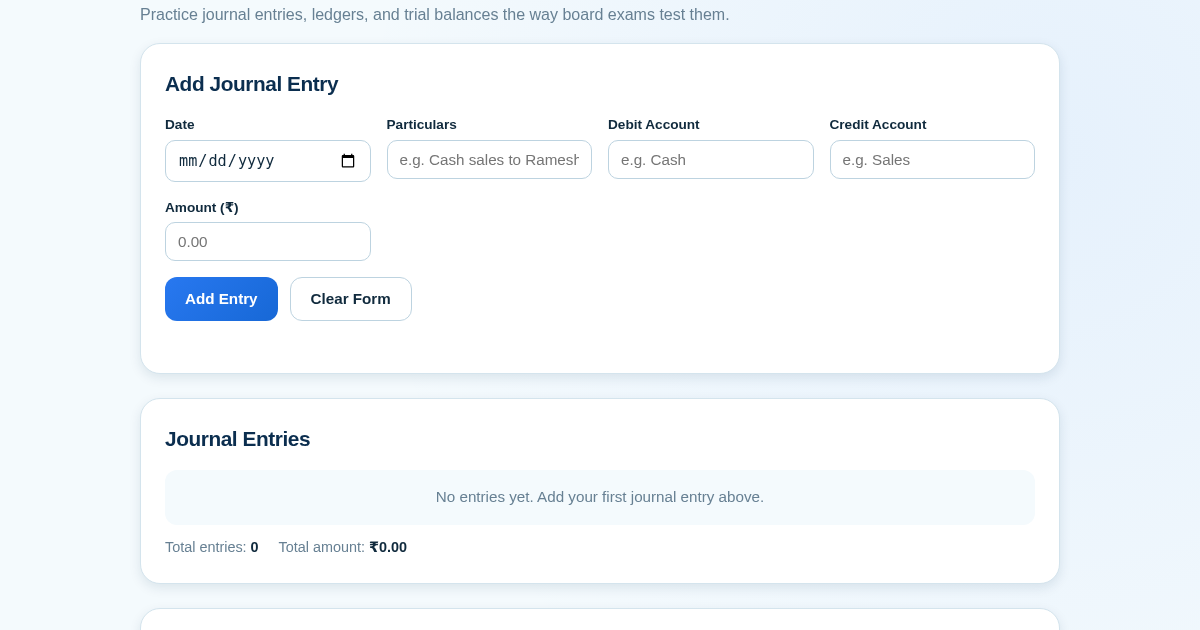
Ledger & Trial Balance Practice Tool
Commerce students in Class 10-12 need to practice journal entries and see how they flow into ledgers, trial balances, and balance sheets for board exams. This tool lets them enter transactions and instantly see the…
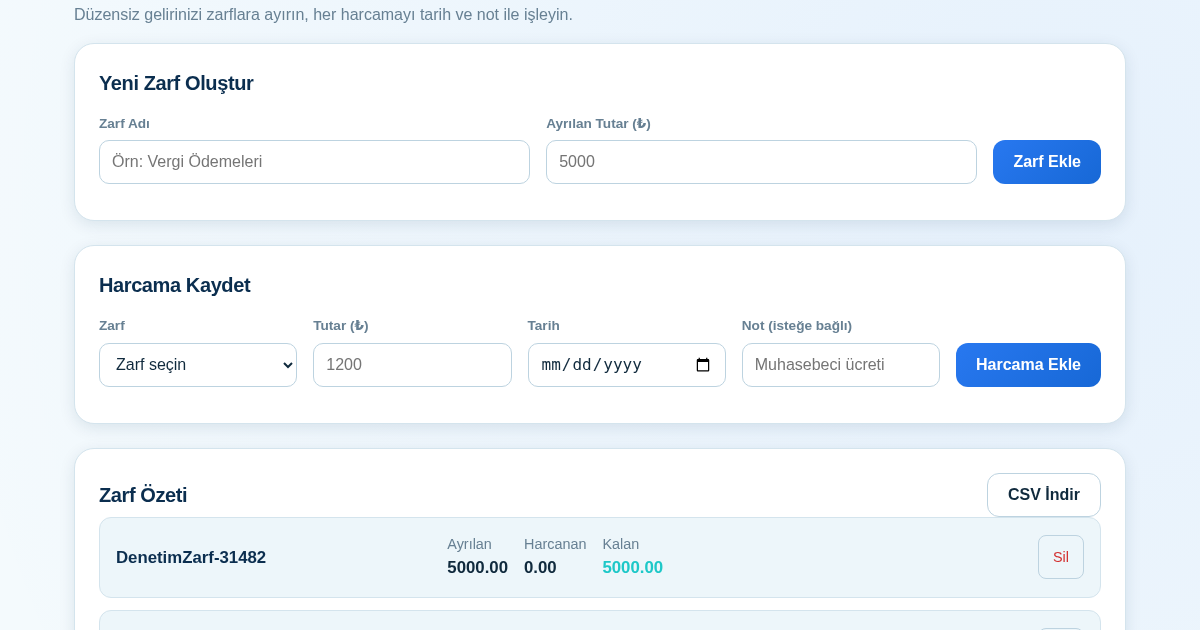
KASA - Serbest Çalışanlar İçin Zarf Bütçesi
Serbest çalışanlar düzensiz gelirlerini vergi, kira ve yaşam giderleri gibi zarflara bölerek bütçelerini düzenli tutabilir. Her harcamayı tarih ve not ile ilgili zarfa işleyerek ne kadar ayırdığını ve ne kadar…
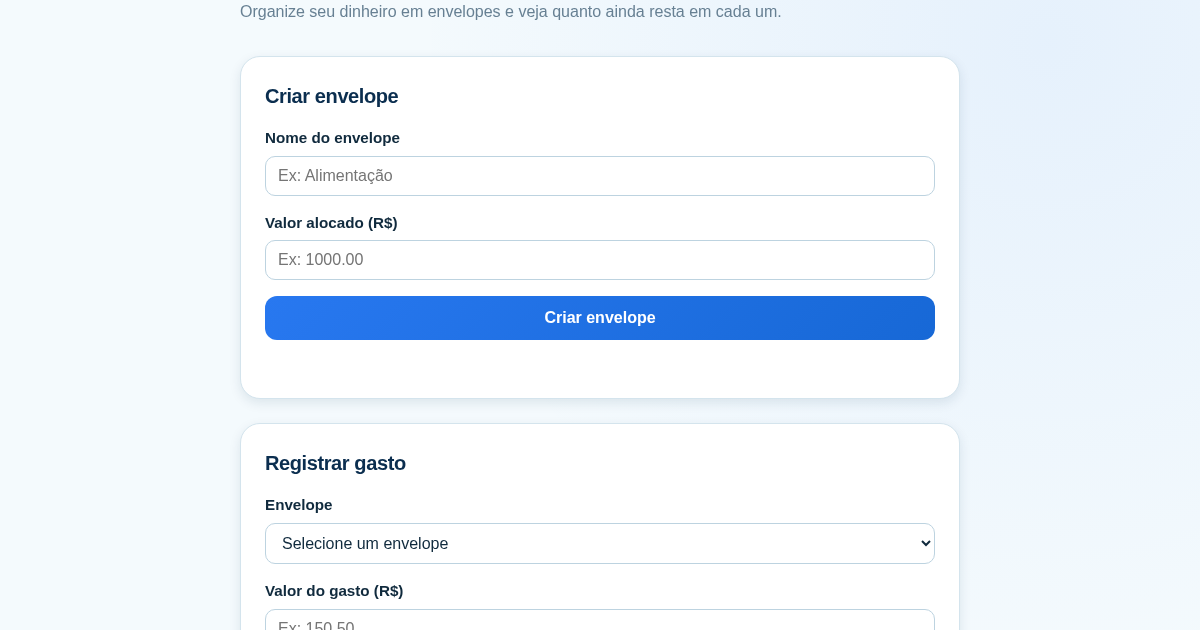
Calculadora de Orçamento por Envelopes (Pix)
Este aplicativo ajuda brasileiros a organizar seu dinheiro em envelopes de orçamento, como alimentação, transporte e lazer, sem precisar conectar uma conta bancária. Ele resolve o problema de controlar gastos do dia a…
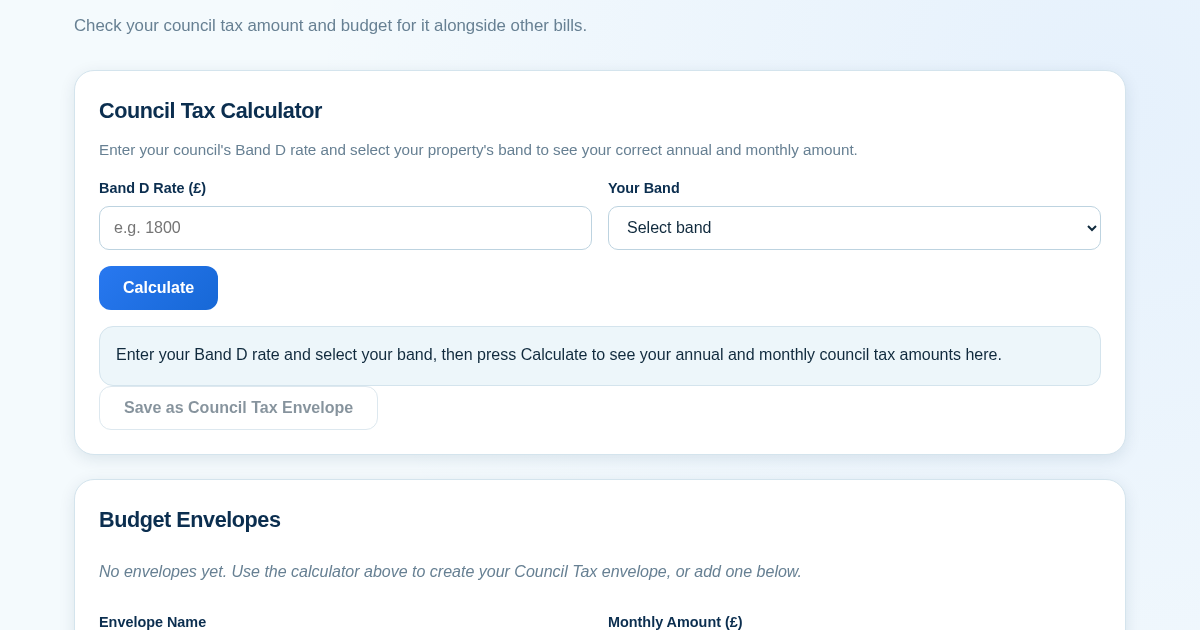
Council Tax Envelope Budget
This app helps UK residents verify they are paying the correct council tax amount for their property band by calculating it from their council's published Band D rate. It then provides a simple envelope-based budgeting…